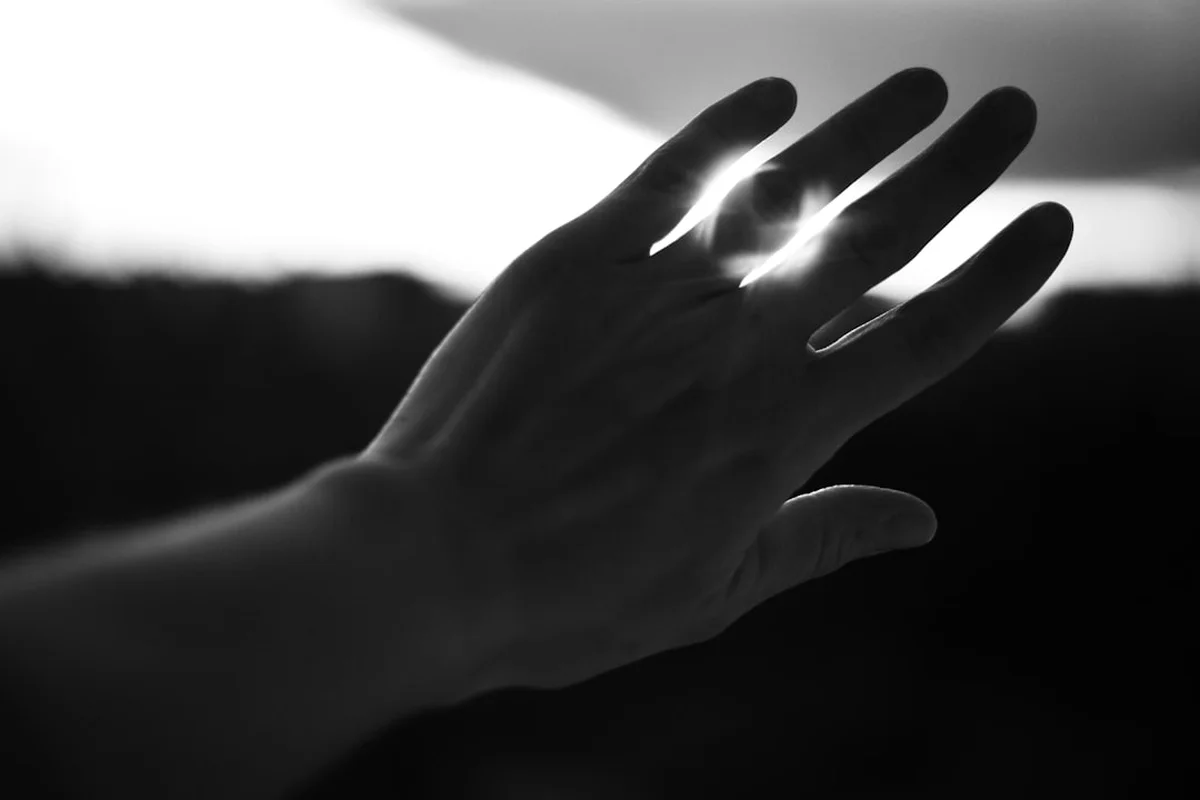
There's a question worth sitting with — quietly, without rushing to answer.
What is healing, actually?
Most of us inherit a definition that lives in the background of every conversation about our bodies and minds: healing is identifying what's wrong, and fixing it. Find the broken part. Apply the right intervention. Return to baseline.
That model serves a lot of medicine well. Set the bone. Treat the infection. Remove the growth. Problem, solution, done.
But anyone who has sat with chronic pain, unresolved grief, or a pattern that keeps returning knows this framing reaches a limit. Some things can't be fixed.
Not because they're stubborn — because they're not actually broken. They're held.
What "held" means.
Held is different from broken. Held is energy that hasn't completed its movement — a charge that paused because the moment wasn't safe enough to let it through.
The body remembers it, stores it, organises around it. Not as damage. As protection.
Tension is held. Grief that didn't get to land is held. Patterns of bracing that once kept you safe in environments that no longer exist — those are held too.
You're not a broken thing awaiting repair. You're a system carrying patterns — some of them held because at some point, holding them was the best you could do.
Healing as unwinding.
What if healing isn't about fixing — but about unwinding?
Unwinding is a different verb. It says: whatever was bound up can become unbound, if the conditions are right. No force required. No diagnosis needed. No-one telling the body what's wrong with it.
This isn't a subtle distinction. It reframes the entire relationship between you and what you're carrying.
You're not broken. You're holding something that, given the right conditions, can move.
Safety is the mechanism.
Under the right conditions — presence, awareness, sound, compassion — the system reorganises itself. Not because we force it. Because we allow the body to do what it already knows how to do: regulate and return.
This isn't mysticism. It's nervous-system science.
The vagus nerve, the autonomic cycling between activation and rest, the feedback loops between breath and heart and brain — all of it is built for return. Return is the default. Bracing is protective.
When the nervous system stops needing to brace, it stops bracing.
What I see in sessions.
In Biofield Tuning, the forks introduce a coherent signal into the field around your body. The field responds.
Where energy is held, the tone changes character — and that change is what I listen for. The work is to locate what's held, hold the work there, and let the system do what it needs. (For the full session walkthrough, see what to expect in a session.)
I'm not fixing you. The body knows what to do — my job is to create the conditions for that to happen.
For some, what unwinds is physical tension. For others, an emotion that hadn't yet had space to move.
Sometimes a memory surfaces. Sometimes nothing surfaces consciously, and yet the days that follow feel different — quieter, less braced, more available.
What healing looks like.
The body returns to its natural ease. Not because anything was broken — because what was held is no longer held.
That's healing. Not adding something new. Letting what was holding on, let go.
Experience it
Want to feel what unwinding feels like?
A Biofield Tuning session creates the conditions for the body to do what it already knows how to do. 60 to 90 minutes, one-on-one, in person at Onespace Collective in Mona Vale or online from anywhere.
See sessions